Complete History of the Panthéon
Explore the story of Paris’s Panthéon — from Soufflot’s vision to the nation’s evolving rites of remembrance.
Table of Contents
Louis XV’s Vow & Dedication
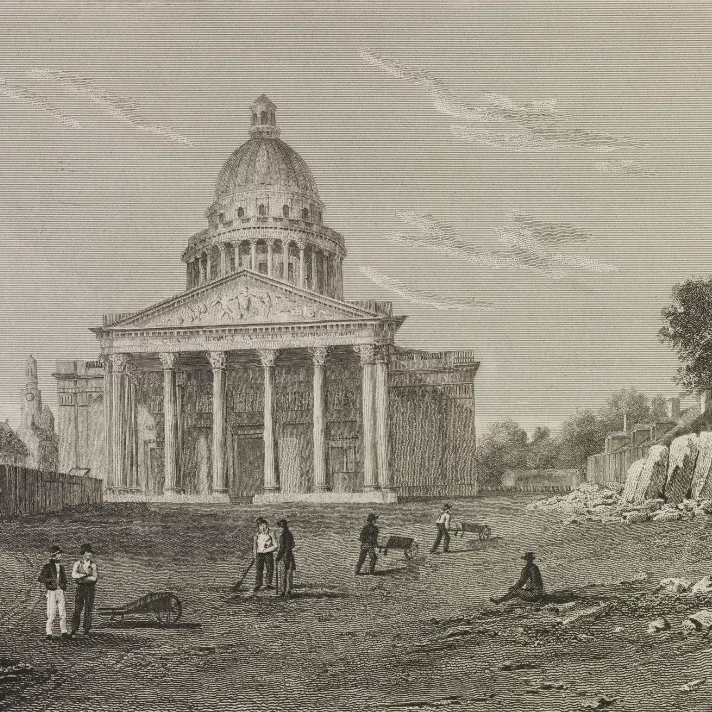
In the mid‑18th century, Louis XV vowed to rebuild the ancient church of Sainte‑Geneviève after recovering from illness — a gesture of thanksgiving that would reshape the hill above the Latin Quarter. The commission went to Jacques‑Germain Soufflot, who envisioned a church bathed in light: classical columns, a vast nave, and a daring structural harmony marrying Gothic slenderness to antique forms.
Soufflot’s design prized elegance and clarity. Foundations were sunk deep into the hill, piers refined, and a coffered dome conceived to rise in layered shells. Though he died before completion, the building that emerged kept faith with his ambition — a beacon of reason and devotion standing at the city’s intellectual heart (Sorbonne, Collège de France, and libraries close at hand). The dedication to Saint Geneviève, patroness of Paris, set the tone: a place for public gratitude and sober grandeur.
Construction, Engineering & Materials
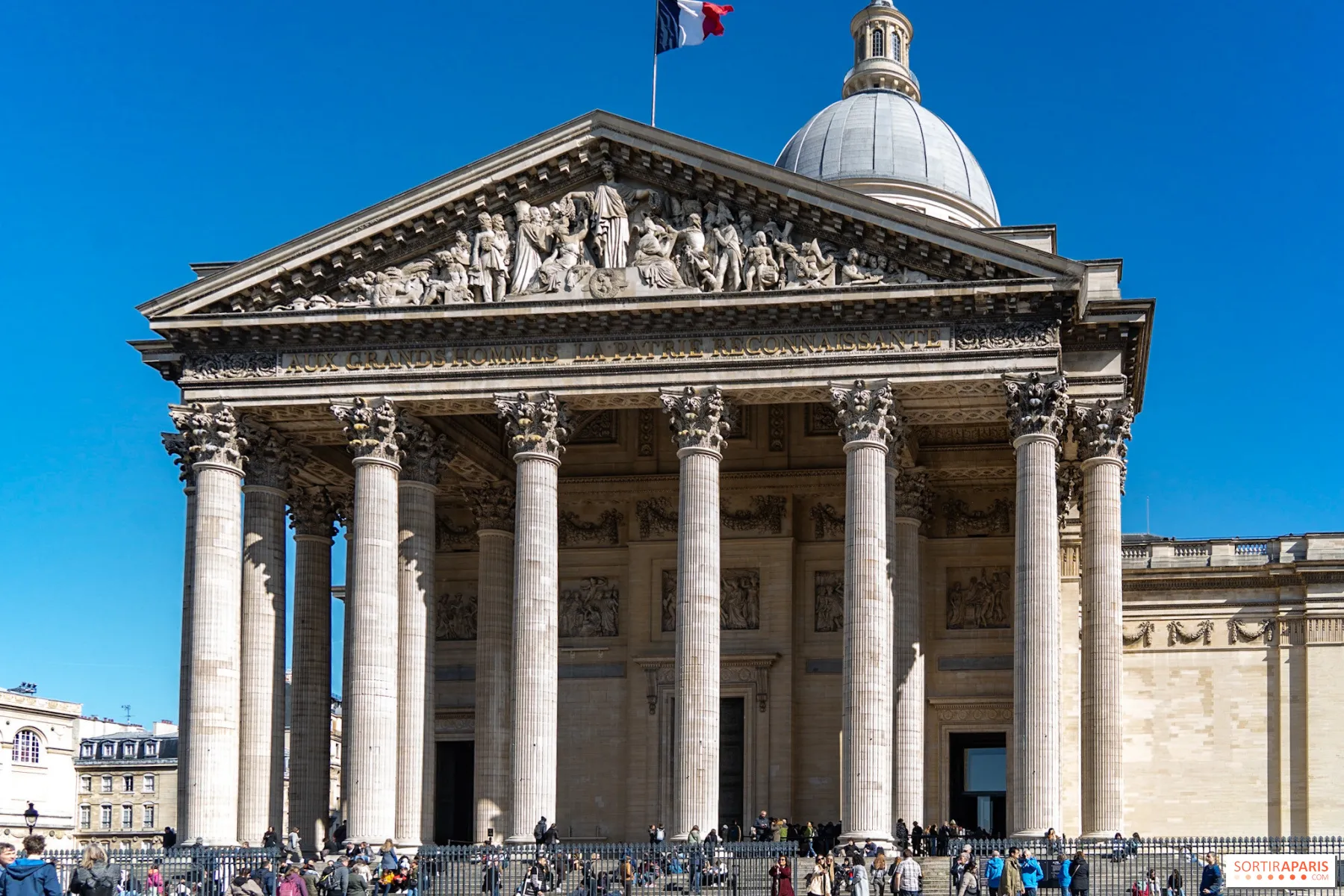
Work began in 1757 and advanced through decades of political and financial tides. Jean‑Baptiste Rondelet, Soufflot’s collaborator and successor, brought rigor to the project’s structural logic: the dome’s triple shell, the colonnaded drum, the careful distribution of loads into massive piers — all calculated to maintain grace without sacrificing stability.
Parisian stone, robust yet workable, defines the Panthéon’s skin. Inside, the architecture leans on proportion rather than excess ornament. Engineering debates of the era — the weight of vaults, the thrust of arches — are written into the building’s bones. Later restorations consolidated joints, cleaned façades, and protected sculptures, preserving the clarity of Soufflot’s neoclassical language for new generations.
Design, Dome & Architecture
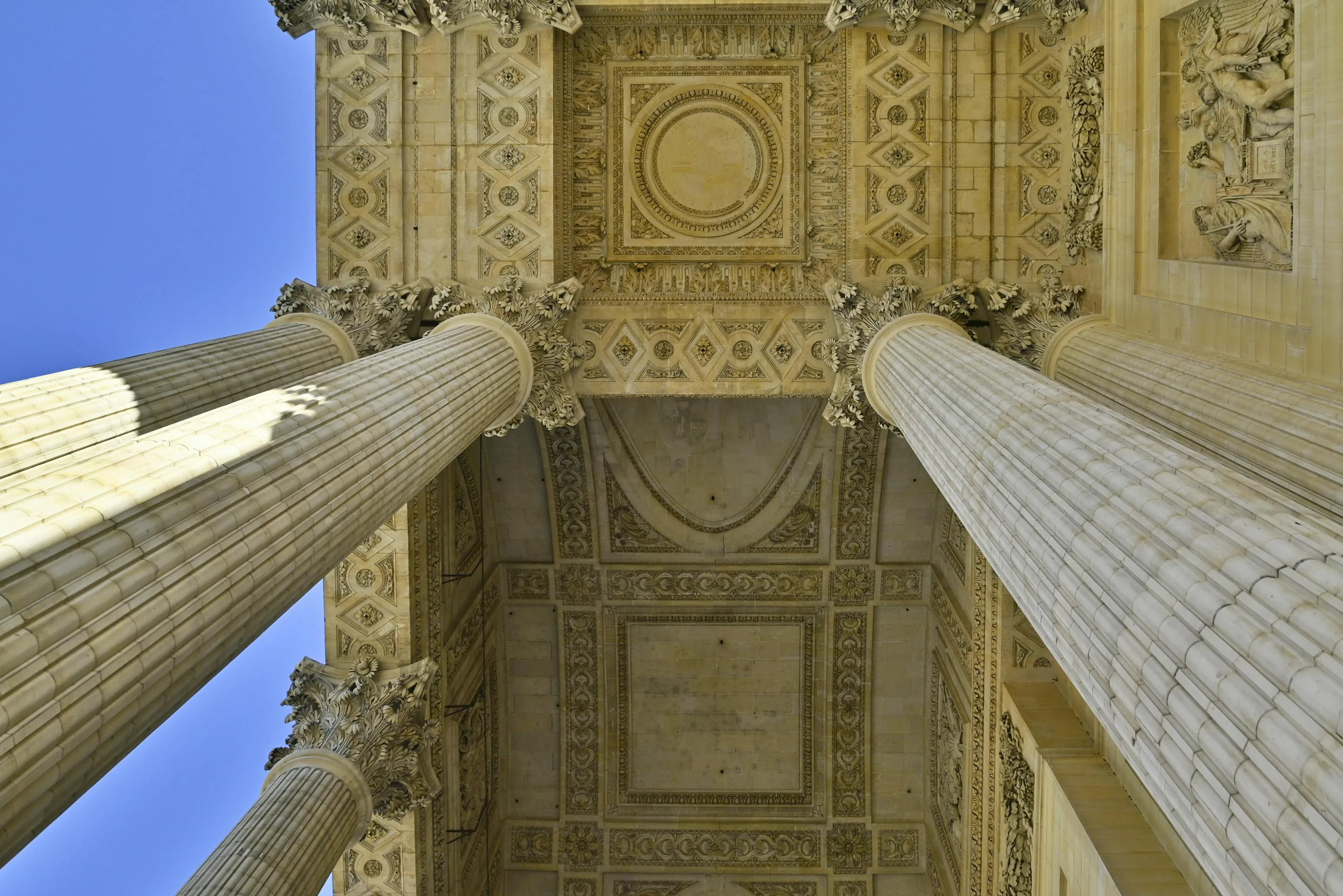
The Panthéon looks Roman and feels modern. A temple front — portico and pediment — faces the city. Behind it, the great crossing rises under the dome, a geometric choreography of coffers and light. The colonnade frames views outward when access is open, while within, painted cycles narrate episodes of faith and civic virtue: Clovis, Saint Geneviève, Joan of Arc — stories that trace the long curve of France’s identity.
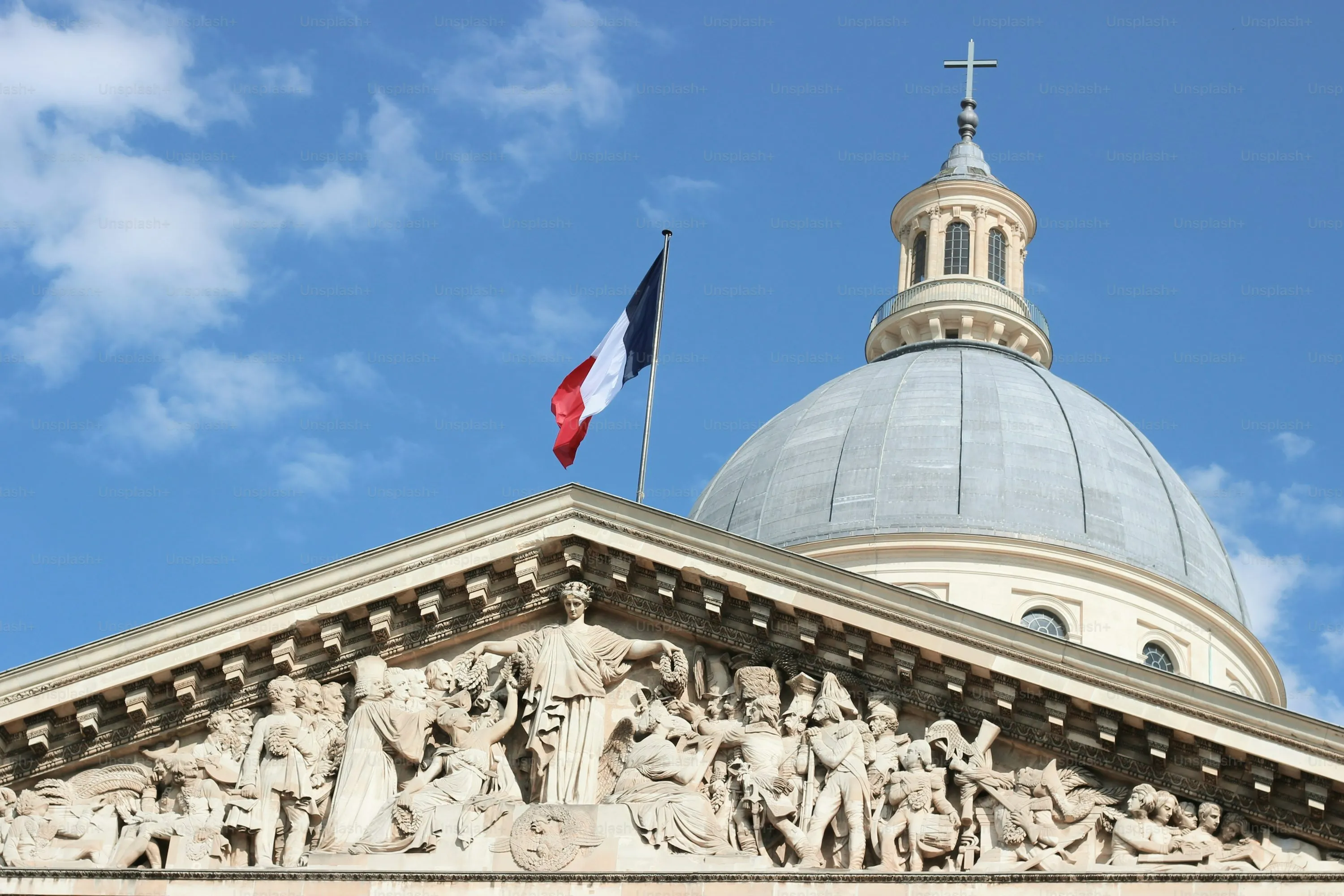
David d’Angers’s pediment crowns the façade with an image of the nation honoring its great figures. The interior’s disciplined order finds counterpoint in sculpture and inscription: cenotaphs, reliefs, and plaques that keep memory active. The dome’s layered construction — inner shells and outer silhouette — creates both intimacy and spectacle, turning a mathematical problem into a poetic skyline.
Art, Science & Symbolism
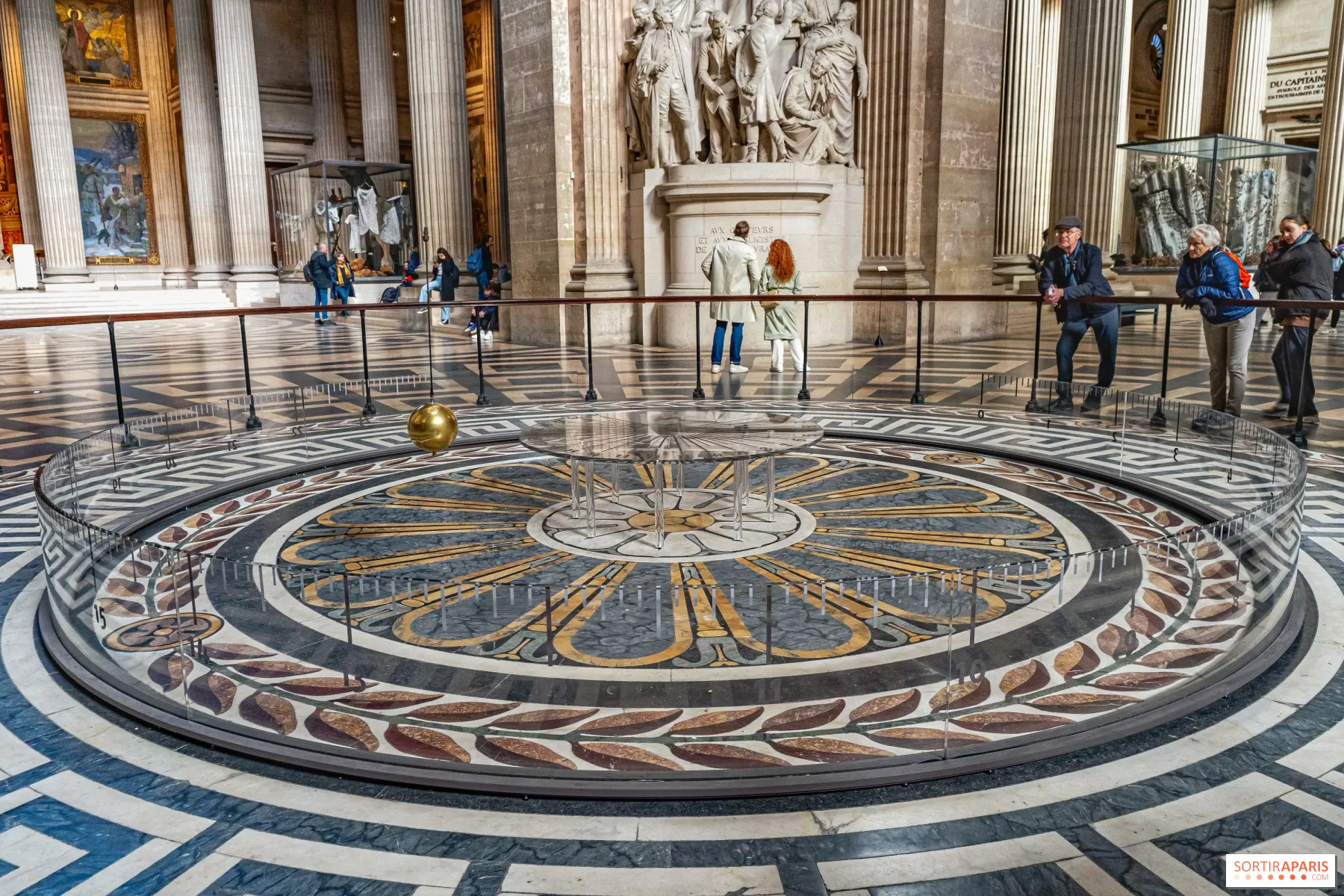
The Panthéon is a gallery of ideas. Paintings and reliefs narrate episodes of faith and history; inscriptions trace the lives of those interred. In 1851, the physicist Léon Foucault suspended a pendulum from the dome and let the Earth do the rest. As the plane of swing drifted, visitors witnessed a quiet revolution — proof without rhetoric, a secular miracle in a sanctified space.
Science and memory have shared the Panthéon ever since. Temporary installations revisit the pendulum; new inductions mark evolving values, adding women and resistance figures alongside writers and statesmen. The symbolism is layered but lucid: a republic of letters and deeds, held together by architecture, ritual, and the human impulse to remember.
Secularization, Preservation & Restoration
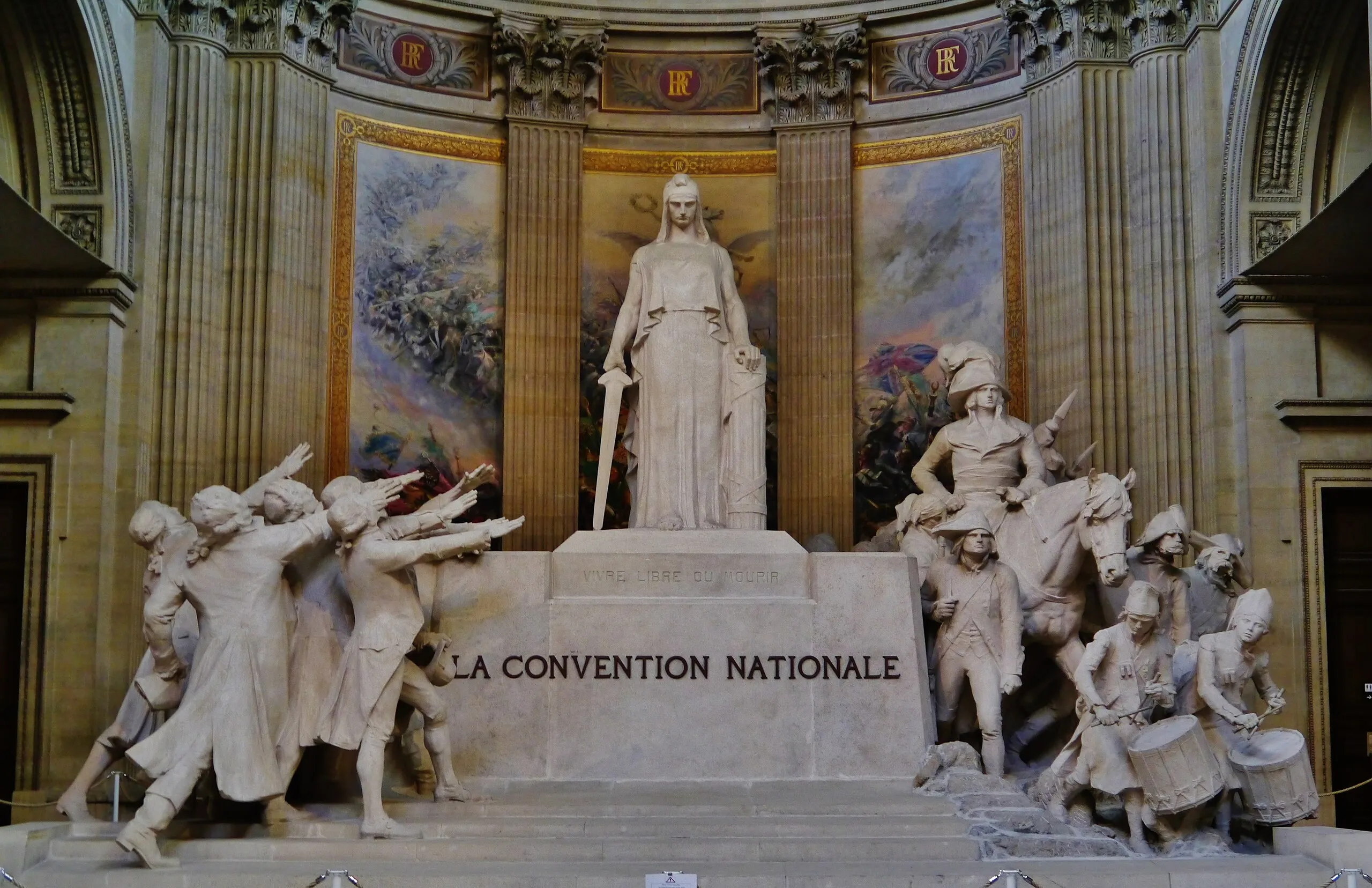
Revolution changed the building’s fate: from church to Panthéon, from confessional to civic. The 19th century saw oscillations — periods of religious rededication and renewed secular purpose — but the idea of a national mausoleum prevailed. Conservation followed, with a modern emphasis on clarity, access, and safety.
Restoration balances respect and necessity. Façades are cleaned without erasing patina; structural joints are strengthened; sculptures and painted cycles are cared for. The aim is not to freeze the Panthéon, but to keep it legible — a readable city of stone where the nation can keep its appointments with memory.
Republican Rituals & Media
Inductions to the Panthéon are national moments: processions, speeches, and the placement of remains or cenotaphs in the crypt. Media coverage extends the ritual beyond the hill of Sainte‑Geneviève, turning the monument into a shared forum for gratitude and debate.
From newspapers to television and digital platforms, the Panthéon’s ceremonies invite reflection on who we honor and why — a living conversation that keeps the building relevant without diminishing its solemnity.
Visitor Experience & Interpretation
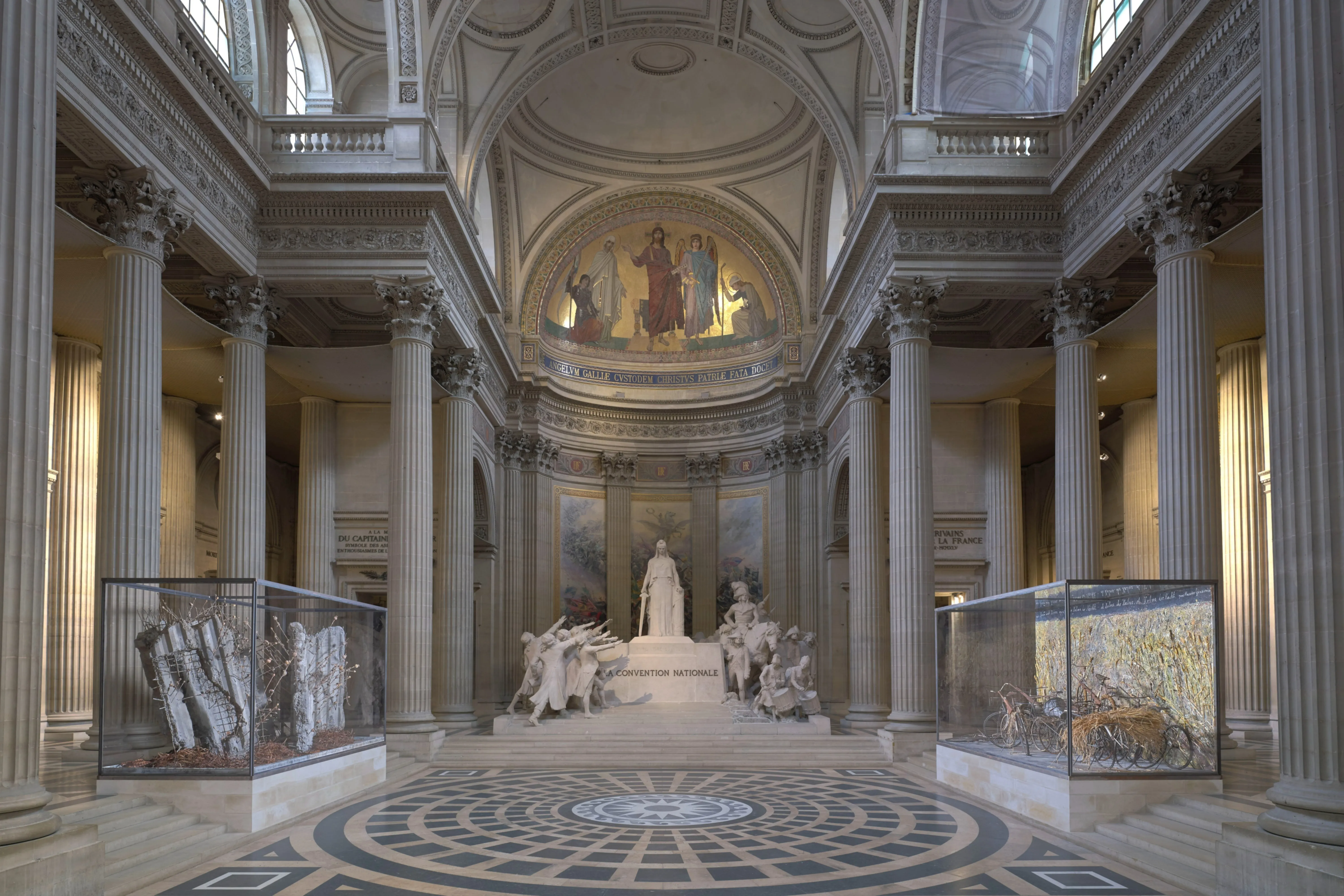
Visitors arrive with schoolbags, guidebooks, camera lenses, and quiet hopes. Interpretation has deepened: audio guides, exhibitions, and accessible pathways help connect architecture to story, names to lives. The crypt’s modest lighting and clear signage favor reflection over spectacle.
Seasonal dome access changes the rhythm of a visit: ascent, view, and descent bracket time in the nave and crypt. The Panthéon is never only about the past — it’s about reading the present with the past nearby, and leaving with a steadier sense of the city.
Revolution, Empire & 19th Century
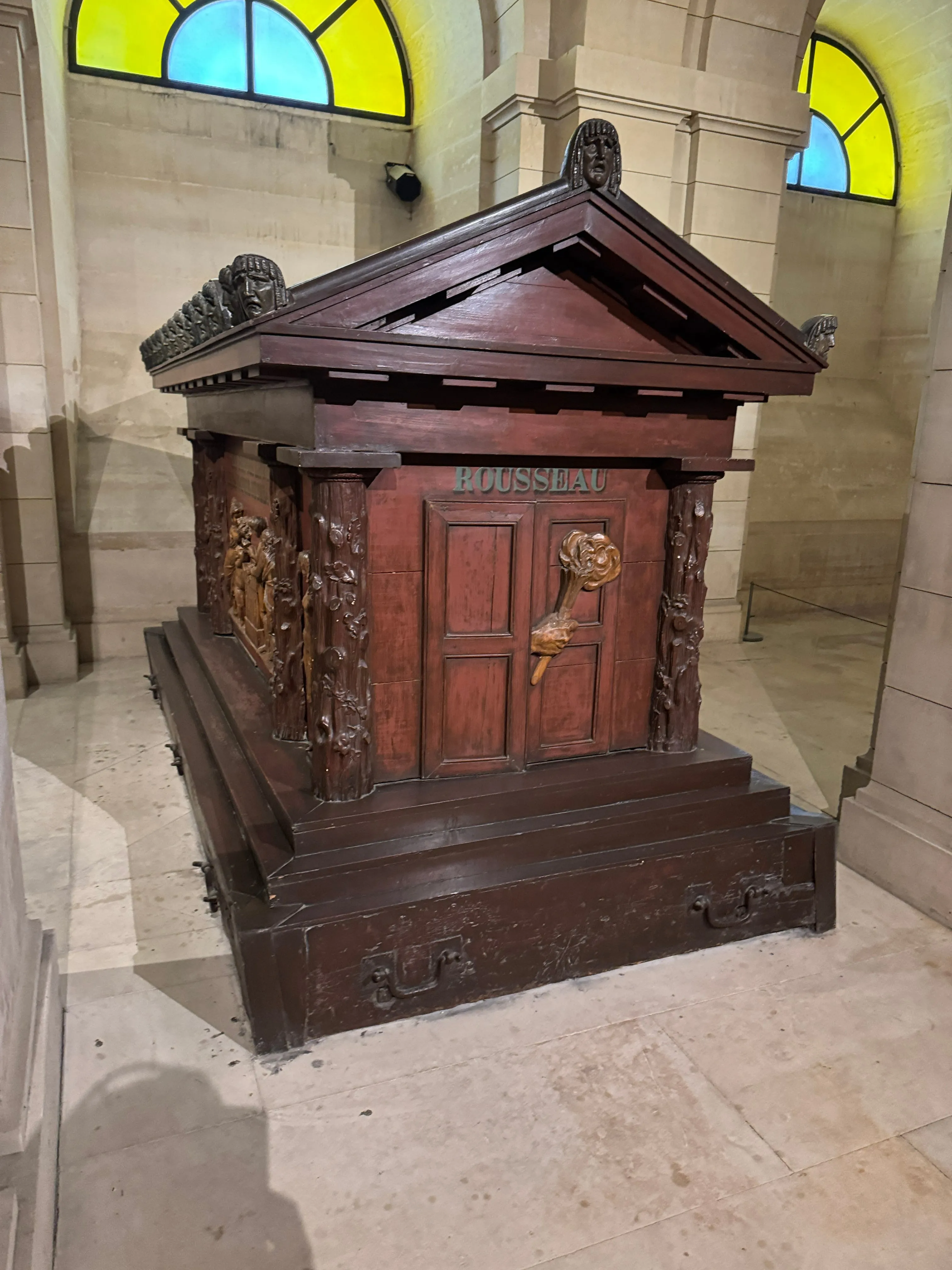
The Revolution secularized the building and enshrined the idea of a national pantheon. The 19th century oscillated: reconsecrations, restorations, and renewed civic claims. Voltaire (1791) and Rousseau (1794) entered early, anchoring the crypt with Enlightenment voices.
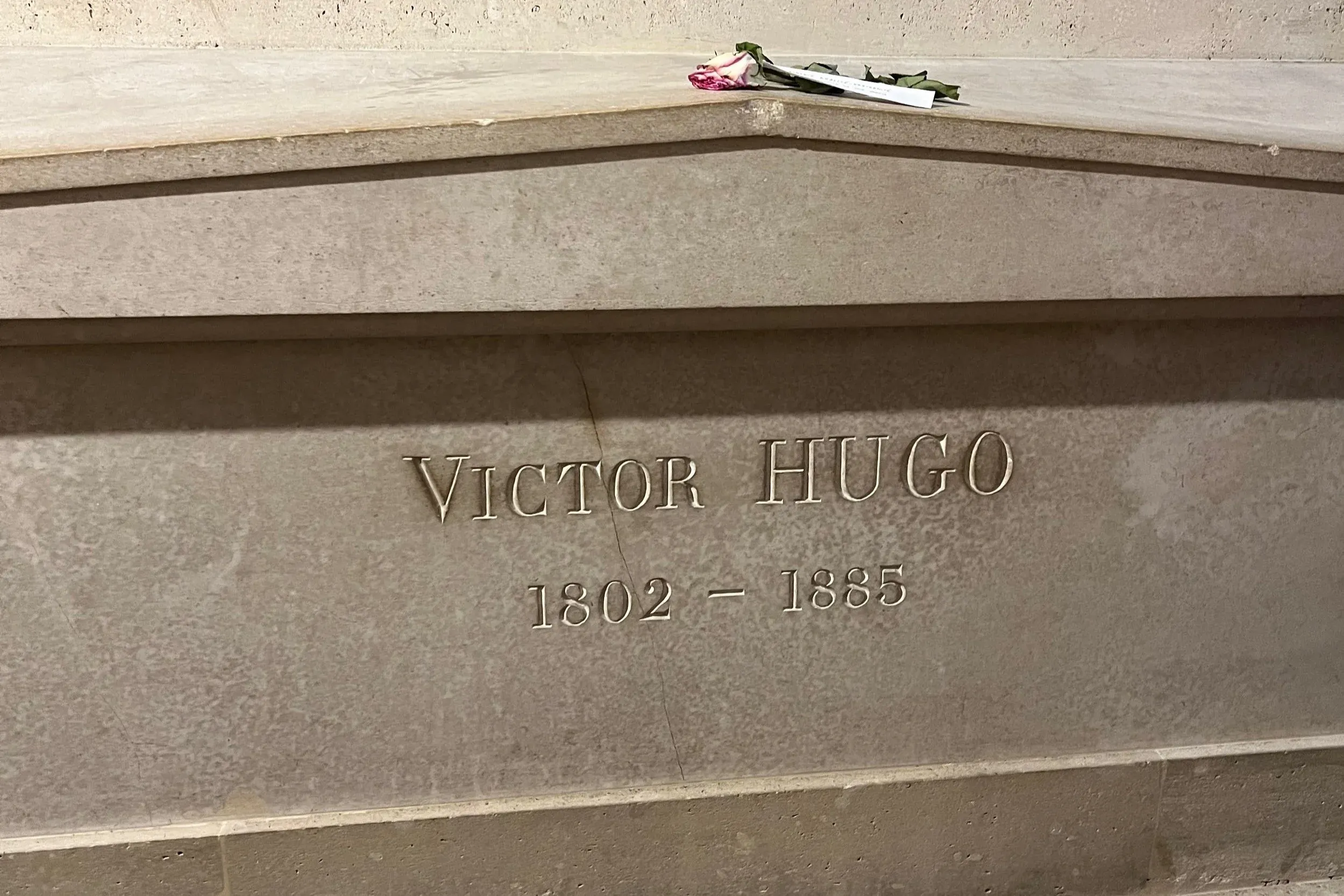
Victor Hugo’s induction in 1885 was a national pageant — crowds lining boulevards, a city acknowledging literature as a public good. Émile Zola followed; later centuries added scientists, resistance heroes, and stateswomen, widening the story told underground.
20th Century: Wars & Memory
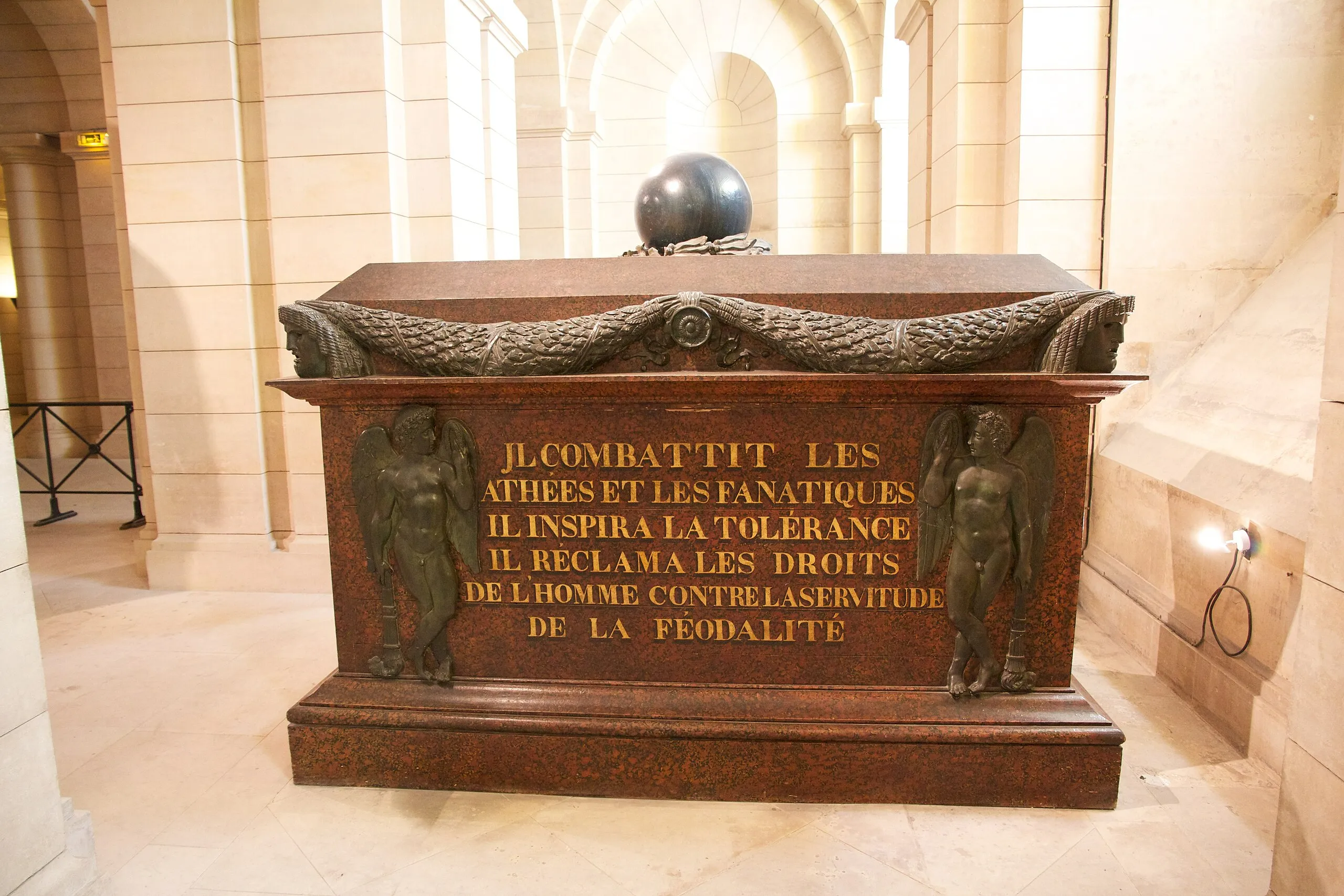
The 20th century brought wars, reckonings, and renewed uses of the Panthéon for national remembrance. Public ceremonies and commemorations framed the building as both archive and agora — a place to learn, to mourn, and to recommit.
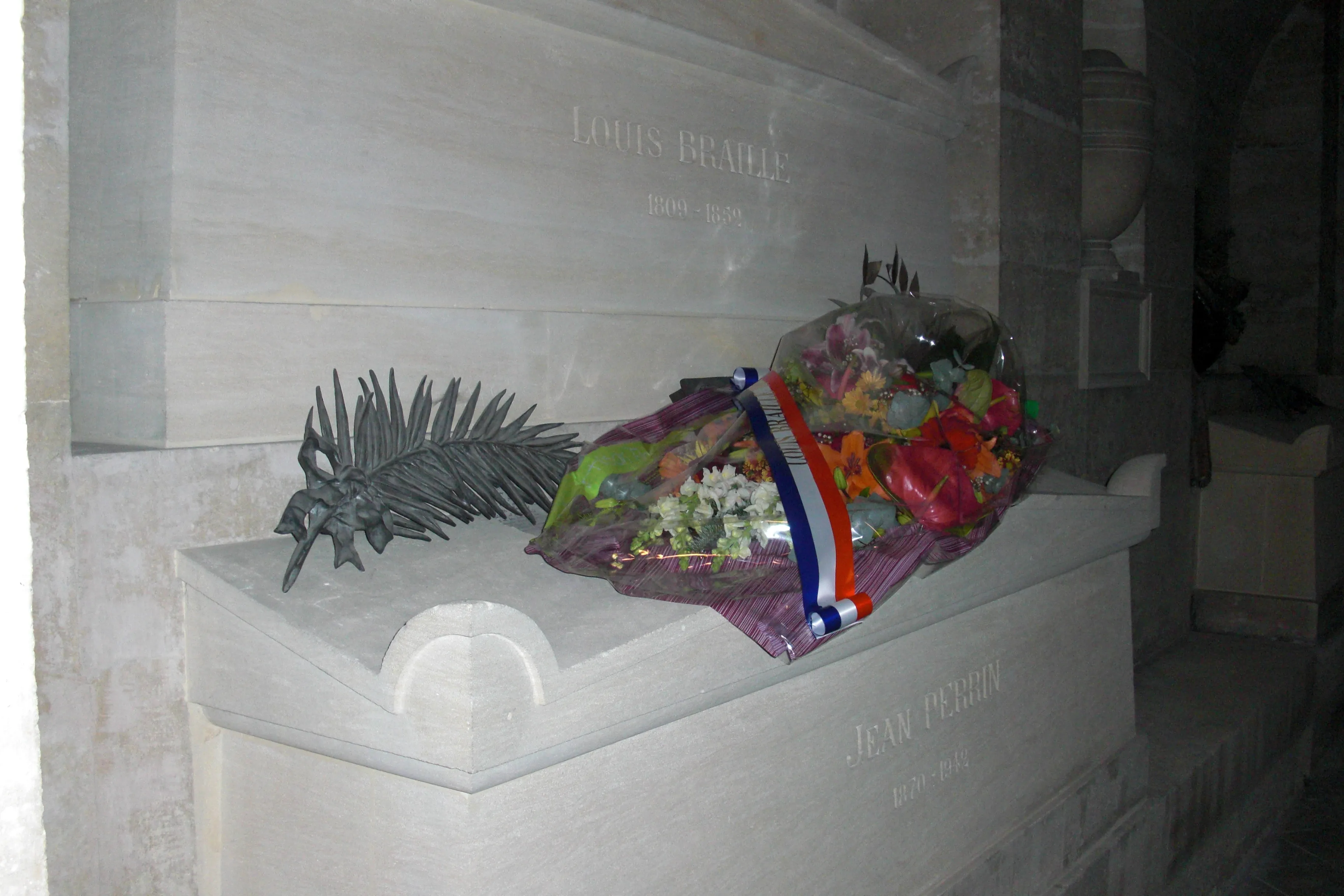
The crypt became an index of plural memory: writers and scientists, political leaders and resistance figures. After World War II, the Panthéon’s role as a civic sanctuary solidified, welcoming new generations to a solemn, open conversation about France’s ideals.
Foucault’s Pendulum & Modern Science
In 1851, Léon Foucault offered Paris a demonstration that felt like poetry: a pendulum, a floor, and time. The slow rotation of the swing’s plane revealed the Earth turning beneath our feet. Audiences saw, without argument, what textbooks asserted — a union of clarity and wonder that suits the Panthéon’s measured grandeur.
The pendulum has returned in temporary installations, cementing the building’s reputation as a home for reason as well as reverence. School groups and curious travelers stand in the nave and watch the bob move — a shared, quiet astonishment in a busy city 🕰️.
Women in the Panthéon
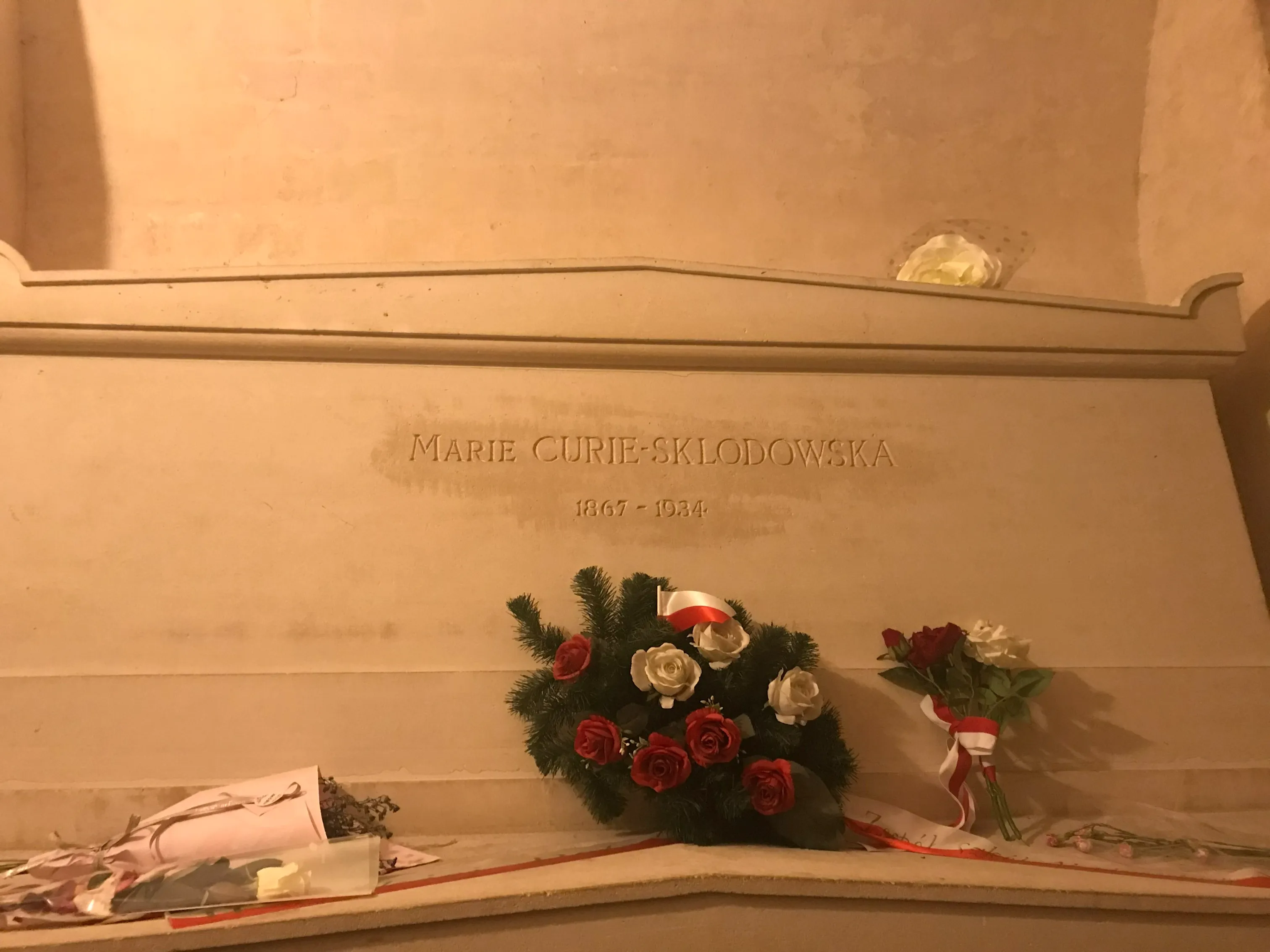
For much of its history, the Panthéon reflected a narrow canon. The late 20th and early 21st centuries began to change that, inducting women whose lives shaped France: Marie Curie, the first woman to rest in the Panthéon on her own merits; Geneviève de Gaulle‑Anthonioz; Germaine Tillion; Simone Veil — voices of science, resistance, and civic renewal.
These inductions signal not an endpoint but a path: a broader, truer pantheon where courage, discovery, and service outweigh the old boundaries. Visitors sense the change — a building widened by its stories 🌟.
Nearby Latin Quarter Landmarks
Stroll to the Jardin du Luxembourg, the Sorbonne, the Collège de France, and Saint‑Étienne‑du‑Mont. Cross to the Île de la Cité for Notre‑Dame’s restored silhouette, or wander to the Mouffetard market for village vibes.
Bookshops on Boulevard Saint‑Michel, cafés on Place de la Sorbonne, and quiet streets around the Panthéon offer the city at human scale — perfect before or after your visit.
Cultural & National Significance
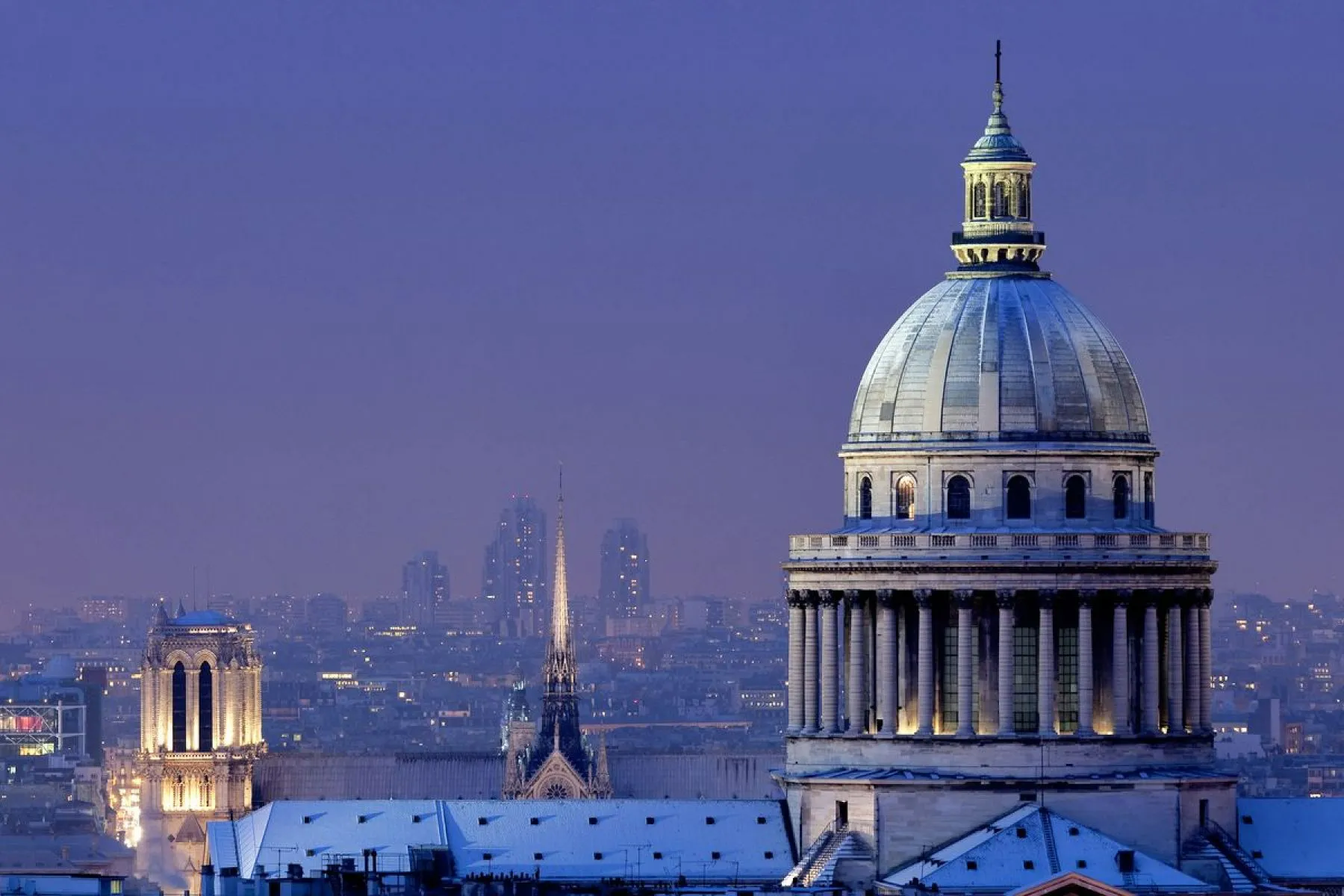
The Panthéon is a compass for civic life — a place where the nation asks who it is and who it honors. Architecture provides the stage, but names and ceremonies provide the meaning: a dialogue across centuries, revised with care.
It remains a living monument, sustained by public rituals, careful conservation, and the quiet steps of visitors. In the nave and the crypt, Paris rehearses gratitude — a practice as modern as it is ancient.
Table of Contents
Louis XV’s Vow & Dedication
In the mid‑18th century, Louis XV vowed to rebuild the ancient church of Sainte‑Geneviève after recovering from illness — a gesture of thanksgiving that would reshape the hill above the Latin Quarter. The commission went to Jacques‑Germain Soufflot, who envisioned a church bathed in light: classical columns, a vast nave, and a daring structural harmony marrying Gothic slenderness to antique forms.
Soufflot’s design prized elegance and clarity. Foundations were sunk deep into the hill, piers refined, and a coffered dome conceived to rise in layered shells. Though he died before completion, the building that emerged kept faith with his ambition — a beacon of reason and devotion standing at the city’s intellectual heart (Sorbonne, Collège de France, and libraries close at hand). The dedication to Saint Geneviève, patroness of Paris, set the tone: a place for public gratitude and sober grandeur.
Construction, Engineering & Materials
Work began in 1757 and advanced through decades of political and financial tides. Jean‑Baptiste Rondelet, Soufflot’s collaborator and successor, brought rigor to the project’s structural logic: the dome’s triple shell, the colonnaded drum, the careful distribution of loads into massive piers — all calculated to maintain grace without sacrificing stability.
Parisian stone, robust yet workable, defines the Panthéon’s skin. Inside, the architecture leans on proportion rather than excess ornament. Engineering debates of the era — the weight of vaults, the thrust of arches — are written into the building’s bones. Later restorations consolidated joints, cleaned façades, and protected sculptures, preserving the clarity of Soufflot’s neoclassical language for new generations.
Design, Dome & Architecture
The Panthéon looks Roman and feels modern. A temple front — portico and pediment — faces the city. Behind it, the great crossing rises under the dome, a geometric choreography of coffers and light. The colonnade frames views outward when access is open, while within, painted cycles narrate episodes of faith and civic virtue: Clovis, Saint Geneviève, Joan of Arc — stories that trace the long curve of France’s identity.
David d’Angers’s pediment crowns the façade with an image of the nation honoring its great figures. The interior’s disciplined order finds counterpoint in sculpture and inscription: cenotaphs, reliefs, and plaques that keep memory active. The dome’s layered construction — inner shells and outer silhouette — creates both intimacy and spectacle, turning a mathematical problem into a poetic skyline.
Art, Science & Symbolism
The Panthéon is a gallery of ideas. Paintings and reliefs narrate episodes of faith and history; inscriptions trace the lives of those interred. In 1851, the physicist Léon Foucault suspended a pendulum from the dome and let the Earth do the rest. As the plane of swing drifted, visitors witnessed a quiet revolution — proof without rhetoric, a secular miracle in a sanctified space.
Science and memory have shared the Panthéon ever since. Temporary installations revisit the pendulum; new inductions mark evolving values, adding women and resistance figures alongside writers and statesmen. The symbolism is layered but lucid: a republic of letters and deeds, held together by architecture, ritual, and the human impulse to remember.
Secularization, Preservation & Restoration
Revolution changed the building’s fate: from church to Panthéon, from confessional to civic. The 19th century saw oscillations — periods of religious rededication and renewed secular purpose — but the idea of a national mausoleum prevailed. Conservation followed, with a modern emphasis on clarity, access, and safety.
Restoration balances respect and necessity. Façades are cleaned without erasing patina; structural joints are strengthened; sculptures and painted cycles are cared for. The aim is not to freeze the Panthéon, but to keep it legible — a readable city of stone where the nation can keep its appointments with memory.
Republican Rituals & Media
Inductions to the Panthéon are national moments: processions, speeches, and the placement of remains or cenotaphs in the crypt. Media coverage extends the ritual beyond the hill of Sainte‑Geneviève, turning the monument into a shared forum for gratitude and debate.
From newspapers to television and digital platforms, the Panthéon’s ceremonies invite reflection on who we honor and why — a living conversation that keeps the building relevant without diminishing its solemnity.
Visitor Experience & Interpretation
Visitors arrive with schoolbags, guidebooks, camera lenses, and quiet hopes. Interpretation has deepened: audio guides, exhibitions, and accessible pathways help connect architecture to story, names to lives. The crypt’s modest lighting and clear signage favor reflection over spectacle.
Seasonal dome access changes the rhythm of a visit: ascent, view, and descent bracket time in the nave and crypt. The Panthéon is never only about the past — it’s about reading the present with the past nearby, and leaving with a steadier sense of the city.
Revolution, Empire & 19th Century
The Revolution secularized the building and enshrined the idea of a national pantheon. The 19th century oscillated: reconsecrations, restorations, and renewed civic claims. Voltaire (1791) and Rousseau (1794) entered early, anchoring the crypt with Enlightenment voices.
Victor Hugo’s induction in 1885 was a national pageant — crowds lining boulevards, a city acknowledging literature as a public good. Émile Zola followed; later centuries added scientists, resistance heroes, and stateswomen, widening the story told underground.
20th Century: Wars & Memory
The 20th century brought wars, reckonings, and renewed uses of the Panthéon for national remembrance. Public ceremonies and commemorations framed the building as both archive and agora — a place to learn, to mourn, and to recommit.
The crypt became an index of plural memory: writers and scientists, political leaders and resistance figures. After World War II, the Panthéon’s role as a civic sanctuary solidified, welcoming new generations to a solemn, open conversation about France’s ideals.
Foucault’s Pendulum & Modern Science
In 1851, Léon Foucault offered Paris a demonstration that felt like poetry: a pendulum, a floor, and time. The slow rotation of the swing’s plane revealed the Earth turning beneath our feet. Audiences saw, without argument, what textbooks asserted — a union of clarity and wonder that suits the Panthéon’s measured grandeur.
The pendulum has returned in temporary installations, cementing the building’s reputation as a home for reason as well as reverence. School groups and curious travelers stand in the nave and watch the bob move — a shared, quiet astonishment in a busy city 🕰️.
Women in the Panthéon
For much of its history, the Panthéon reflected a narrow canon. The late 20th and early 21st centuries began to change that, inducting women whose lives shaped France: Marie Curie, the first woman to rest in the Panthéon on her own merits; Geneviève de Gaulle‑Anthonioz; Germaine Tillion; Simone Veil — voices of science, resistance, and civic renewal.
These inductions signal not an endpoint but a path: a broader, truer pantheon where courage, discovery, and service outweigh the old boundaries. Visitors sense the change — a building widened by its stories 🌟.
Nearby Latin Quarter Landmarks
Stroll to the Jardin du Luxembourg, the Sorbonne, the Collège de France, and Saint‑Étienne‑du‑Mont. Cross to the Île de la Cité for Notre‑Dame’s restored silhouette, or wander to the Mouffetard market for village vibes.
Bookshops on Boulevard Saint‑Michel, cafés on Place de la Sorbonne, and quiet streets around the Panthéon offer the city at human scale — perfect before or after your visit.
Cultural & National Significance
The Panthéon is a compass for civic life — a place where the nation asks who it is and who it honors. Architecture provides the stage, but names and ceremonies provide the meaning: a dialogue across centuries, revised with care.
It remains a living monument, sustained by public rituals, careful conservation, and the quiet steps of visitors. In the nave and the crypt, Paris rehearses gratitude — a practice as modern as it is ancient.